
Death and bereavement are deeply personal experiences, yet they also reflect broader societal trends. In Canada, the funeral landscape is shaped by a growing and aging population, rising cremation rates, cultural diversity, and evolving end-of-life options including Medical Assistance in Dying (MAID).
The following statistics offer a comprehensive overview of funeral and death trends in Canada in 2026.
After more than two decades of helping Canadian families through loss, I have learned that numbers on a page rarely console anyone by themselves. Statistics like these frame the landscape. They tell us what families across Canada are choosing and why. But the service itself lives or dies on one detail. That is the personal note. Know your facts, then set them aside and bring your own voice to the room.
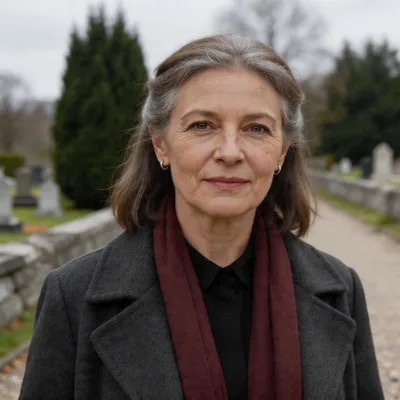 Claire Fairchild
1. Approximately 330,000 People Die in Canada Each Year
Statistics Canada recorded 323,000 deaths in 2022, with the number trending upward as the population ages. Projections suggest approximately 330,000 or more annual deaths by 2025-2026.
By 2025, approximately 19% of Canadians are aged 65 and older, a demographic shift that is accelerating the annual death toll and transforming the funeral industry.1
2. A Traditional Funeral Costs $7,000 to $12,000
The average cost of a traditional burial funeral in Canada ranges from $7,000 to $12,000, including the casket, service, cemetery plot, and headstone. Costs vary significantly by province and urban versus rural location.
In major cities like Toronto and Vancouver, cemetery plots alone can exceed $10,000. British Columbia has among the highest funeral costs in the country, with traditional funerals in Greater Vancouver often exceeding $10,000.2
3. Cancer Is the Leading Cause of Death at 26.4%
Cancer (malignant neoplasms) accounts for approximately 26.4% of all deaths in Canada, making it the leading cause. Heart disease follows as the second leading cause at approximately 17.5%.
These two conditions together account for nearly 44% of all Canadian deaths. Understanding leading causes of death provides context for the types of loss that families most frequently face.3
4. 13,241 Canadians Received MAID in 2023
Medical Assistance in Dying (MAID) accounted for 13,241 deaths in Canada in 2023, representing 4.7% of all deaths. This reflects a dramatic increase from 1,018 MAID provisions in 2016, the first year of legalization.
Cancer remains the most commonly cited underlying condition in MAID requests. Quebec and British Columbia consistently report higher MAID rates per capita than other provinces.4
5. Life Expectancy in Canada Is 81.7 Years
Life expectancy at birth in Canada is approximately 81.7 years as of 2022, with men averaging 79.7 years and women 83.8 years. This declined slightly from a pre-pandemic high of 82.3 years in 2019.
Despite the recent dip, Canada remains among the countries with the highest life expectancy globally, reflecting the quality of its healthcare system and standard of living.5
6. Eulogies Are a Central Part of Canadian Funeral Tradition
In Canada, the eulogy is considered one of the most meaningful elements of a funeral or memorial service. Whether delivered by a family member, friend, or celebrant, it provides an opportunity to honour the life and legacy of the deceased.
A well-crafted eulogy typically weaves together personal stories, the deceased's values, and their impact on others. It serves as both a tribute to the person who has passed and a source of comfort for those grieving.6
7. 34.6% of Canadians Report No Religious Affiliation
In the 2021 Census, 34.6% of Canadians reported no religious affiliation, up from 23.9% in 2011. This significant shift directly impacts funeral traditions, with more secular and personalized services becoming common.
The decline in religious affiliation is driving demand for non-traditional funeral services, including celebration-of-life ceremonies, outdoor memorials, and personally curated tributes.7
8. Only 36% Have Completed an Advance Care Plan
Only about 36% of Canadians have completed an advance care plan or advance directive, despite a majority saying they believe it is important. This gap between intention and action is a persistent challenge.
Approximately 22 million Canadians, about 70% of the adult population, have some form of life insurance coverage, providing at least some financial protection for surviving dependants.8
9. 23% of Canada's Population Are Immigrants
Twenty-three percent of Canada's population are immigrants as of the 2021 Census, bringing funeral traditions from around the world. These include Hindu cremation rites, Muslim same-day burial, Chinese ancestor veneration, and many other cultural practices.
Indigenous peoples, including First Nations, Metis, and Inuit, make up approximately 5% of the population (1.8 million people) and maintain diverse traditional end-of-life practices that vary significantly by nation and community.9
10. MAID Deaths Have Increased 13-Fold Since Legalization
From 1,018 provisions in 2016 to over 13,000 in 2023, MAID deaths have grown approximately 13-fold in seven years. Canada now has one of the most established medically assisted dying frameworks in the world.
The growth in MAID reflects both broader eligibility criteria and increasing public acceptance. The program continues to evolve, with ongoing discussions about further expansions and safeguards.10
11. 75% of Canadians Choose Cremation
Approximately 75% of Canadians choose cremation, making Canada one of the countries with the highest cremation rates in the world. This rate has risen dramatically from roughly 48% in 2000 to 56% in 2006 to over 75% today.
The cremation rate is projected to exceed 80% by 2030. Traditional burial now accounts for only about 22-25% of dispositions, down from over 50% at the turn of the century.11
12. Celebration of Life Services Are Increasingly Popular
As religious affiliation declines and cremation rises, celebration-of-life services have become increasingly popular across Canada. These events focus on remembering the person's life with joy rather than following a traditional funeral format.
These services often feature personal touches such as photo displays, favourite music, and shared stories, with the eulogy serving as the emotional centrepiece that brings the gathering together.12
13. The Crude Death Rate Is 7.9 per 1,000
Canada's crude death rate is approximately 7.9 deaths per 1,000 population as of 2022, up from 7.7 in 2019. The rate is expected to continue rising as the population ages.
This upward trend means that more Canadian families than ever are navigating bereavement, creating growing demand for funeral services, grief support, and resources for honouring loved ones.13
14. Writing a Eulogy Is One of the Most Challenging Tasks in Grief
Many people describe writing a eulogy as one of the most difficult yet rewarding tasks they undertake during bereavement. The challenge of condensing an entire life into a few minutes of words requires careful thought and deep reflection.
Despite the difficulty, the act of writing and delivering a eulogy can be profoundly therapeutic. It provides a structured way to process grief while creating a lasting tribute that family members will cherish.14
15. Over 50% of Canadian Adults Do Not Have a Will
According to repeated surveys, over 50% of Canadian adults do not have a valid will. This lack of estate planning can create significant legal and financial challenges for surviving family members.
Only about 20-25% of Canadians have pre-arranged or pre-paid their funeral, despite the financial and emotional benefits of planning ahead for end-of-life expenses.15
16. Over 53,000 Canadians Have Died from COVID-19
Over 53,000 cumulative COVID-19 deaths have been reported in Canada through early 2025. The pandemic had a profound impact on funeral practices, temporarily limiting gathering sizes and accelerating interest in cremation and simpler arrangements.
The pandemic experience highlighted the importance of advance planning and prompted many Canadians to have end-of-life conversations with their families for the first time.16
17. Cemetery Plots Range from $1,000 to Over $10,000
Cemetery plots in Canada range from $1,000 in rural areas to over $10,000 in major metropolitan centres like Toronto and Vancouver. The cost of burial space is one of the primary drivers of the total funeral bill.
Rising real estate values in Canadian cities have directly impacted cemetery costs, contributing to the growing preference for cremation as a more affordable alternative.17
18. Approximately 70% of Adults Have Life Insurance
Approximately 22 million Canadians, representing about 70% of the adult population, have some form of life insurance coverage. This provides crucial financial support for families dealing with funeral costs and loss of income.
Despite this relatively high coverage rate, the amounts held are often insufficient to cover both funeral expenses and ongoing family financial needs, highlighting the importance of adequate planning.18
19. Conference Board of Canada: deaths to surpass births by 2030
The Conference Board of Canada projects that annual deaths in Canada will exceed births by 2030, with deaths rising to over 425,000 per year by 2040. The crude death rate is rising fastest in Atlantic provinces, where it already exceeds 11 per 1,000. Life expectancy stabilised at 81.3 years overall after the pandemic dip.19
20. British Columbia Has the Highest Cremation Rate at 86-89%
British Columbia leads the country with a cremation rate of approximately 86-89%, while Quebec has historically had the lowest rate among large provinces at around 65-70%, influenced by Catholic tradition.
Provincial differences in cremation rates reflect a combination of cultural heritage, religious composition, land availability, and urban versus rural demographics.20
21. Most Eulogies Last 5 to 10 Minutes
Funeral professionals recommend that eulogies last between 5 and 10 minutes, long enough to share meaningful stories and reflections without overwhelming an emotionally fragile audience.
For those writing a eulogy for the first time, it can feel like an overwhelming task during a period of grief. Having a clear structure, including an opening, key memories, and a closing tribute, helps guide the writing process.21
22. Cultural Diversity Enriches Canadian Funeral Practices
Canada's multicultural population means that funeral practices span an extraordinary range of traditions. From the Irish wake tradition in Newfoundland to Sikh cremation ceremonies in British Columbia, diversity is woven into how Canadians honour their dead.
This cultural richness means that eulogies in Canada often blend traditions, languages, and customs, creating uniquely personal tributes that reflect the multicultural identity of the deceased and their community.
The funeral landscape in Canada is evolving rapidly, shaped by rising cremation rates, increasing cultural diversity, growing acceptance of MAID, and a shift toward more personalized services. Through it all, the eulogy remains a cornerstone of how Canadians honour those they have lost. Whether delivered at a traditional funeral or a celebration of life, a heartfelt, well-crafted eulogy gives voice to grief, celebrates a life well-lived, and offers comfort to those left behind.22
23. Get Smarter About Money: only 9 percent of Canadians have pre-paid funeral plans
Get Smarter About Money, the Ontario Securities Commission consumer education site, reports that only about 9 percent of Canadians hold pre-paid funeral plans, despite 64 percent saying they intend to prepare in advance. Average pre-paid plan value is around C$7,400. Pre-need contracts grew 11 percent year on year in 2024.23
24. Over 50% Express Interest in Green Burial
Surveys indicate that over 50% of Canadians express interest in environmentally friendly funeral options, though actual uptake remains relatively low at an estimated 5% of dispositions.
Canada has approximately 30 to 40 certified natural or green burial grounds, mostly concentrated in Ontario and British Columbia. Alkaline hydrolysis (water cremation) is also available in several provinces as an eco-friendly alternative.24
25. Personalization Makes Eulogies More Meaningful
Grief counsellors and funeral professionals consistently emphasize that personalized eulogies, those that include specific memories, anecdotes, and the deceased's own words, are far more comforting to the bereaved than generic tributes.
Including details about the person's personality, passions, and relationships helps mourners connect with the memory of their loved one and begin the process of healing through shared remembrance.25
26. The Funeral Industry Generates $2.2-$2.5 Billion Annually
The Canadian funeral services industry generates approximately $2.2 to $2.5 billion in annual revenue, served by an estimated 1,500 to 1,800 funeral homes across the country.
While large corporate operators like Park Lawn Corporation and Service Corporation International hold a growing market share, the majority of Canadian funeral homes remain independently owned family businesses.26
27. MoneySense calculates average Canadian funeral at C$8,800
MoneySense, citing provincial data, places the average traditional Canadian funeral cost at approximately C$8,800. A direct cremation costs around C$2,200, while a full burial with monument can exceed C$15,000 in major cities. Funeral costs have risen 19 percent since 2019, outpacing inflation.27
28. Cremation Costs $2,000 to $5,000
A cremation with a memorial service typically costs between $2,000 and $5,000 in Canada, significantly less than a traditional burial. A direct cremation without any service can cost as little as $1,000 to $2,500.
Average casket costs range from $2,000 to $5,000, with prices spanning from under $1,000 for a simple model to over $10,000 for premium options.28
29. Globe and Mail: pre-need funeral arrangements held by 14 percent of Canadians
The Globe and Mail reported that approximately 14 percent of Canadians over 55 hold formal pre-need funeral arrangements, with average plan values of C$7,400. Quebec leads with 22 percent uptake, while Atlantic provinces sit at 9 percent. Pre-need plan sales grew 13 percent in 2023 as cost-of-dying conversations entered the mainstream.29
Sources
- Statistics Canada(gc.ca)
- Government of Canada(canada.ca)
- Statistics Canada(gc.ca)
- Health Canada(canada.ca)
- Statistics Canada(gc.ca)
- FSAC(fsac.ca)
- Statistics Canada(gc.ca)
- Advance Care Planning Canada(advancecareplanning.ca)
- Statistics Canada(gc.ca)
- Health Canada(canada.ca)
- CANA(cremationassociation.org)
- FSAC(fsac.ca)
- Statistics Canada(gc.ca)
- Advance Care Planning Canada(advancecareplanning.ca)
- Angus Reid Institute(angusreid.org)
- Public Health Agency of Canada(canada.ca)
- CBC News(cbc.ca)
- CLHIA(clhia.ca)
- Conference Board of Canada(conferenceboard.ca)
- CANA(cremationassociation.org)
- FSAC(fsac.ca)
- Statistics Canada(gc.ca)
- Get Smarter About Money(getsmarteraboutmoney.ca)
- Green Burial Society of Canada(greenburialcanada.ca)
- Hospice Foundation(hospicefoundation.ie)
- IBISWorld(ibisworld.com)
- MoneySense(moneysense.ca)
- Bereavement Authority of Ontario(thebao.ca)
- Globe and Mail(theglobeandmail.com)
Frequently Asked Questions
How many people die in Canada each year?
Approximately 330,000 people are expected to die in Canada annually by 2025 to 2026, up from 323,000 recorded in 2022. The number keeps trending upward as the population ages, with roughly 19% of Canadians now aged 65 and older. This demographic shift is accelerating the annual death toll and reshaping the funeral industry.
What percentage of Canadians choose cremation?
About 75% of Canadians now choose cremation, one of the highest rates in the world, up from roughly 48% in 2000. The rate is projected to exceed 80% by 2030, while traditional burial has fallen to around 22 to 25% of dispositions. British Columbia leads the country at roughly 86 to 89%.
What is the leading cause of death in Canada?
Cancer is the leading cause, accounting for about 26.4% of all deaths in Canada. Heart disease follows as the second leading cause at roughly 17.5%. Together these two conditions are behind nearly 44% of all Canadian deaths.
How long should a eulogy last at a Canadian funeral?
Funeral professionals recommend that a eulogy runs between 5 and 10 minutes, long enough to share meaningful stories without overwhelming an emotionally fragile audience. A clear structure with an opening, key memories, and a closing tribute helps guide the writing. Personalized eulogies with specific memories and anecdotes are far more comforting to the bereaved than generic tributes.